


Defining the 3 Categories of SEO [INFOGRAPHIC]

Lindsey Blanchard • September 28, 2021

SEO. You’ve heard a lot about it and how important it is to the success of your online presence. Consumers aren’t going to be able to find you without it! Google won’t rank your website! It can be overwhelming and frustrating, particularly when you’re trying to determine just what the heck SEO is. On-page SEO, off-page SEO, technical SEO – there are so many types of search engine optimization and trying to figure out what they all mean exactly and how to implement them can be enough to make anyone throw in the proverbial marketing towel.

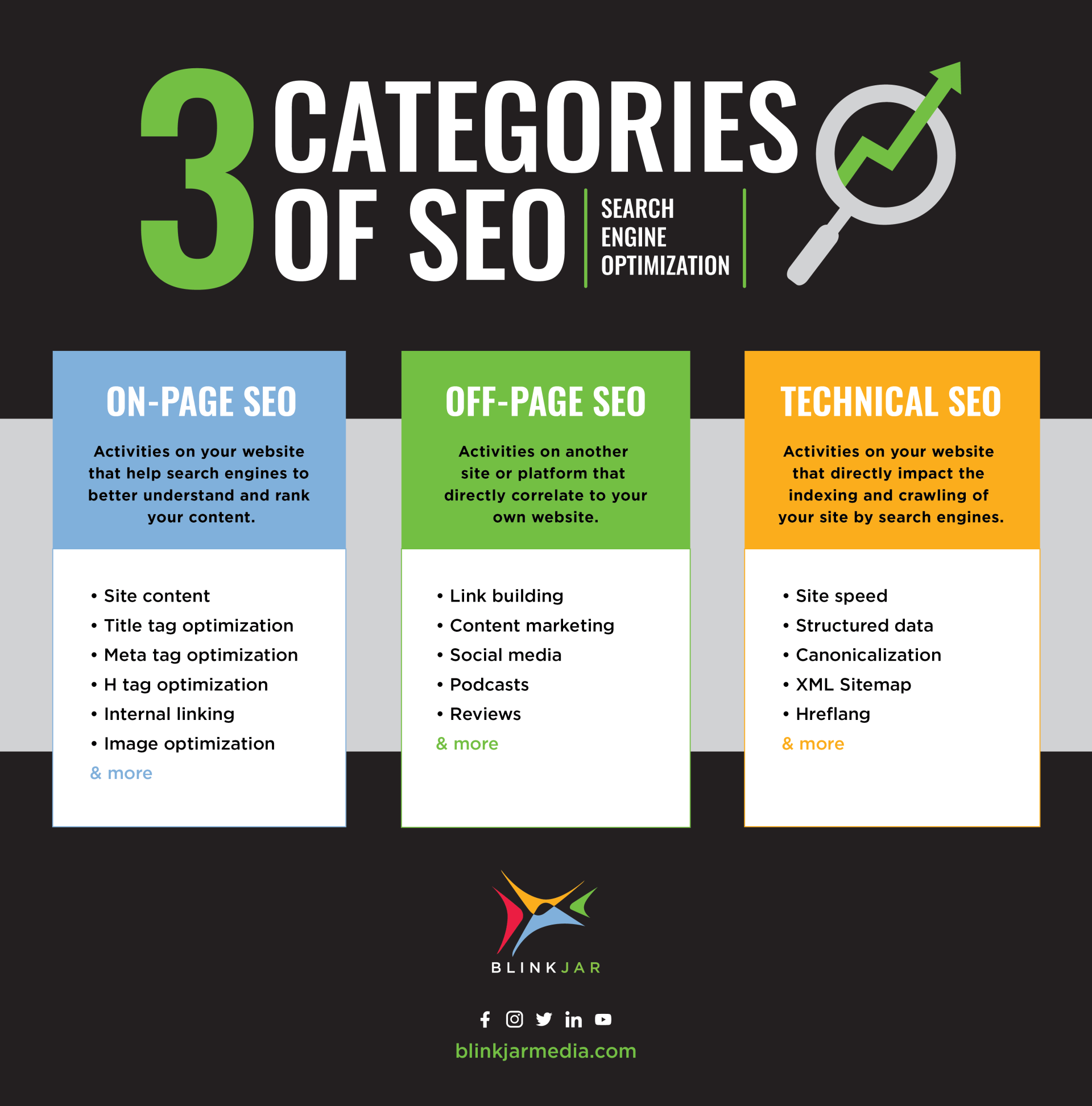
Not to worry, the BlinkJar Media team is well aware of how you feel. Even for professional marketers, keeping up with SEO changes and best practices is an ongoing part of our job. (Google likes to keep us all on our toes!) Still, there are some basics that you should understand about each of the three main types of SEO. Once you understand these, you can more easily develop an action plan and approach each one with confidence.  To help, we’ve outlined the basic definition and examples of on-page, off-page, and technical SEO in the infographic below. Use it as a basic guideline to get started, and remember that BlinkJar is always here if you need a partner to help get it right!

3 categories of SEO
GRADE YOUR WEBSITE
Meta Lead Forms: The Hidden Problems Behind Your Campaign
By Rikki Broussard November 24, 2025
Strong ad metrics don’t always equal strong sales. Learn why Meta Lead Form campaign results can be misleading, and how deeper analysis beyond CPR, click-through rates, and submissions reveals what truly drives performance.
Short-Form Video Strategy: How to Boost Brand Visibility
By Caroline Thaxton November 12, 2025
Static, link-driven posts are losing traction because platforms no longer rewarded that type of content. Find out how to keep users engaged with storytelling through short-form video.
Why Your New Website Isn’t Showing Up in Google Yet
By Rikki Broussard October 22, 2025
Hey everyone, it’s Rikki here! I like to write blogs based on real questions from our clients. Recently, we launched two brand-new websites on fresh domains. Everything about the design, development, and launch went smoothly, but once the sites were live, both clients asked the same question: “Why can’t I find my site on Google yet? Launching a new website is exciting. After weeks (sometimes months) of planning and building, the site is finally live. Naturally, the next step is to open Google, type in one of your main keywords, and expect to see your business right at the top. But here’s the reality: search engines don’t work like flipping a light switch. It’s completely normal (although frustrating) for brand-new websites to take time before appearing in Google search results . How Google Finds and Ranks Websites When your new site goes live, Google has to: Crawl – Send its “bots” to scan and read the site. Index – Store those pages in Google’s database. Rank – Decide where your site belongs in the search results compared to competitors. Submitting a sitemap and setting up Google Search Console helps Google know your site exists. But discovery doesn’t mean instant visibility; it just means the process has started.