


BlinkJar Media: What Does It Mean?

Jared Broussard • January 24, 2017

In Star Wars: The Phantom Menace, we were introduced to the character of Jar Jar Binks, a tall and rangy Gugan outcast from the planet of Naboo. Jar Jar Binks was a clumsy, well-meaning character that failed to endear himself to the public. To many, Jar Jar Binks was the biggest flop in the history of Star Wars. So, we want to set the record straight. Jar Jar Binks has nothing to do with the naming of BlinkJar. Phew, we feel better now. 


Naming your business is the first step in creating your identity as an organization. The name of your business is used in conversations, presentations, proposals, social media posts, and online searches. On a deeper level, your company name is the heart and soul of your existence. In his book “Start With Why," Simon Sinek states that “Nobody cares what you do. They care why you do it." When a company can speak to the why of its organization by referencing their name, then they have made a wise choice for the name.


Why Did You Name Your Company BlinkJar?


Our company is named BlinkJar because Broussard Inc was already taken (bad joke). Our “why” can be explained in the meaning of BlinkJar. Many of our 
team members have a traditional advertising background. During our time in advertising sales, a major transformation was taking place in the landscape of marketing. Social media and search engine marketing were rising mediums providing consumers with new opportunities of communication and information gathering. Many of the discussions with local businesses were turning away from traditional advertising and towards these newer platforms. This media revolution created a significant opportunity for those who embraced and understood where marketing and advertising were headed.


The Meaning of Blink in BlinkJar


Tokyo at night

As the popularity of social media and search engines grows, so does the confusion of local business owners. The average consumer is exposed to over 5,000 messages per day, which means we are living in an over-communicated world. To add to the distraction, we are living in a multi-screened world. In a recent study, Google discovered that viewers watch television with another device in-hand 77% of the time. If this is not enough, technology is providing numerous methods for tuning out advertising. Consumers have more control over the media they consume, but they also have a fragmented attention span that is narrowing daily. With all of these factors at play, how do businesses reach their target market with their message? 


In order to remain relevant, your company’s message must be more focused and concise. In the blink of an eye, if your message doesn’t break through the clutter, it will be ignored. A relevant and clear message is also applicable to the web marketing world as well. The web user will bounce off your site within the first 30 seconds if your website does not clearly explain the purpose of your company's existence. In digital marketing, this behavior is called passing the blink test.


Now you know how the “blink” in BlinkJar is derived.


The Meaning of Jar in BlinkJar

jar in blinkjar

Many experts in the advertising industry reference the book “Positioning: The Battle for Your Mind” as the bible on advertising and marketing strategy. Written by Al Ries and Jack Trout, this marketing masterpiece describes how people use ladders to rank products and brands in their mind. Each step of the ladder represents a brand name, and each ladder is a separate product category. The higher your company is on the ladder, the larger its share of mind. For most categories, the consumer only has room on the ladder for three or four companies before they run out of real estate (memory). If you are not a part of these three or four companies, then you better start creating a new ladder.

At BlinkJar, we took the ladder concept created by Al Reis and Jack Trout and simply replaced the ladders with jars. In order to grow share of mind, your company must dislodge a high-ranking company in the jar. When this proves to be too tall of a task, then your only other option is to create a new jar.


Head & Shoulders is the perfect case study for describing how a company created its own jar. The creators of Head & Shoulders understood that the “jar” for shampoo was already pretty full. Instead of being the seventh or eighth name consumers thought of when they heard the word shampoo, Head & Shoulders wanted to be the first brand consumers thought of when they heard the term dandruff shampoo. In order for this to happen, Head & Shoulders had to create a separate jar in the shampoo sector; one for dandruff shampoo. By creating their own jar, Head & Shoulders became the first name in the small jar of dandruff shampoo in contrast to the eighth or ninth brand name in the larger jar of generic shampoo names. This is the basis for the “jar” of BlinkJar. 


We receive questions about our name regularly, and we love answering them. The answer defines why we exist, and it serves as a reminder of our roots. We hope this blog has done a good job of defining the meaning behind the name BlinkJar.

By Caroline Thaxton July 10, 2026
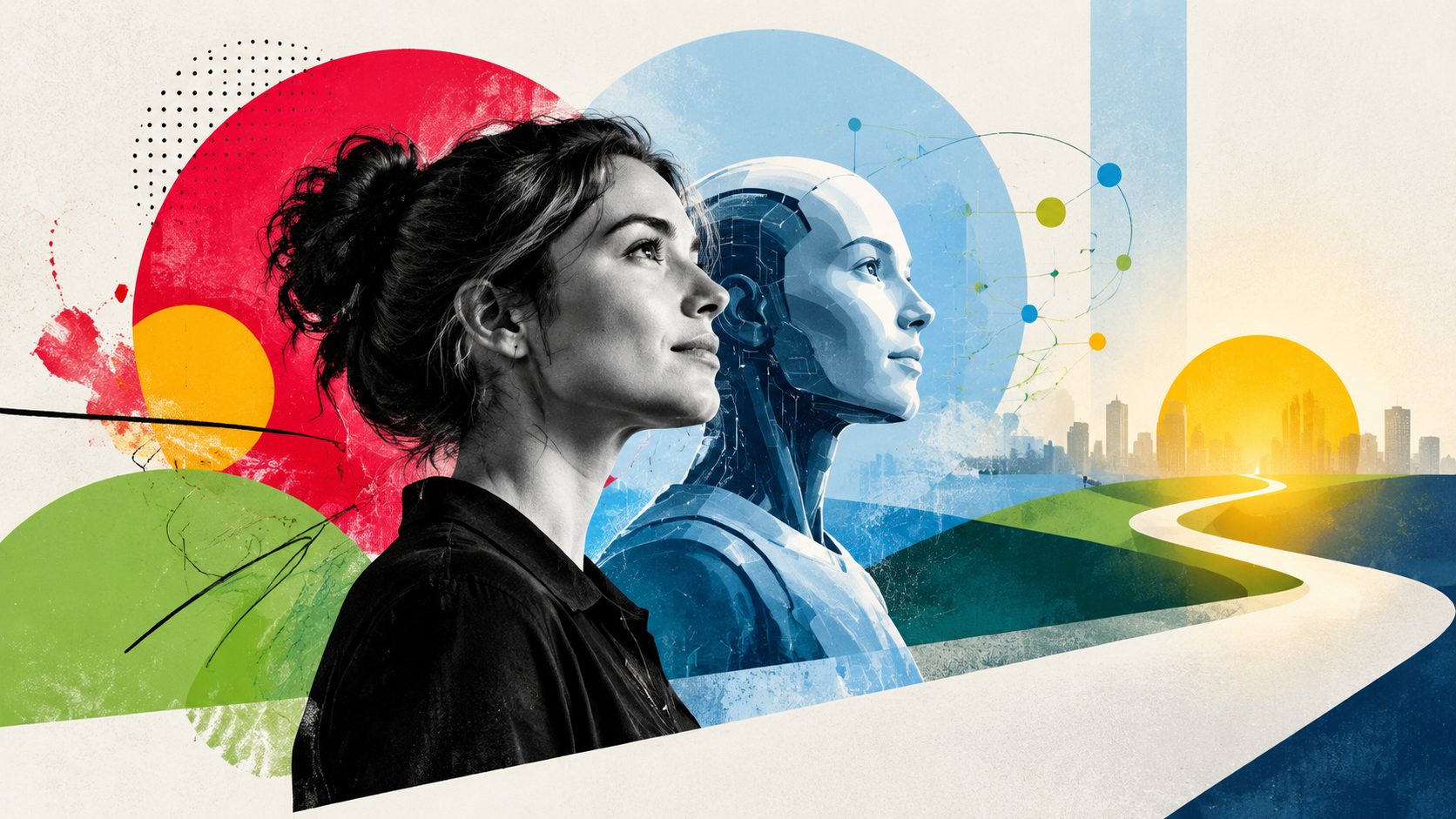
Artificial intelligence is changing the way businesses approach content marketing , social media marketing , and digital communications. AI can generate ideas, streamline workflows, and help marketers create content faster than ever before. At Blinkjar, we embrace AI as a powerful tool, but we also know the most impactful marketing still begins with something technology can't replicate: a genuine human connection. As a Creative Content Specialist at Blinkjar , some of my most valuable work happens away from my desk. Meeting with clients, visiting their businesses, and building real relationships gives me a deeper understanding of who they are and what makes their brands unique. Those face-to-face interactions help me create authentic content that reflects each client's personality , values, and story. Can AI Really Tell Your Brand's Story? Every business has a story worth telling . While AI can help organize information, brainstorm ideas, and improve efficiency, it can't experience a company's culture, observe customer interactions, or hear the passion behind why a business was started. That’s why every interaction matters. Whether we’re on a call, exchanging emails, meeting in person, capturing photos and videos, or simply talking through new ideas, each touchpoint helps us better understand the businesses we support. These conversations allow us to see how a brand operates, hear the stories behind the work, and uncover the details that make it unique. Those real insights often become the foundation for stronger content because they reveal perspectives that AI simply can’t generate. How Do Client Conversations Lead to Better Content Marketing? The more time I spend with the businesses we support, the better I can represent their brand. Photoshoots are one way those connections happen, but many of my strongest content ideas come from everyday conversations, planning calls, emails, meetings, and moments when a client shares something we would not have known otherwise. Those small details often become the difference between content that feels generic and content that feels true to the brand. Whether we're discussing a new project, talking through their day-to-day operations, or simply catching up, those conversations give me the context I need to write content that's accurate, authentic, and true to their voice. Instead of relying on assumptions, I can pull directly from their experiences, expertise, and personality . That's what transforms content from informative to meaningful. How Can AI and Human Creativity Work Together? The future of digital marketing isn't about choosing between AI and people. It's about using both together. AI helps streamline repetitive tasks, organize information, and spark ideas, giving creative professionals more time to focus on strategy, collaboration, and storytelling. At Blinkjar, we use AI to enhance our process, not replace it. Technology helps us work more efficiently, but the relationships we build with our clients remain at the center of everything we create. AI can help us work faster, but it can't replace sitting across the table from a client, hearing their vision, or witnessing firsthand what makes their business special. What Makes Authentic Marketing Stand Out in the Age of AI? As AI becomes more common , authenticity becomes even more valuable. Consumers want to connect with real people, real businesses, and real stories. Because anyone and everyone can now create content at the click of a button, trust is the new signal that shines through in this noisy world. In a recent episode of the Zero Click Marketing podcast , guest Kevin Indig stated that trust is the most important ingredient in this new AI world. Because content is easier and faster to create than ever before, we are no longer just competing with other creators. We are competing with a flood of synthetic content. In this environment, trust is the ultimate differentiator, and you simply cannot build trust without authenticity. Indig goes on to say that trust is the only factor more powerful than traditional search rankings. When people search for information today and get a short list of brands in an LLM response, a Google results page, or an AI Overview, they will always select the brand they trust the most. In essence, trust acts as a conversion booster in this new digital landscape. That's why personal interactions, thoughtful conversations, and hands-on collaboration continue to shape the content we create every day. Technology will continue to evolve, but meaningful relationships will always be the foundation of successful marketing. The best content doesn't just attract attention. It builds trust, creates lasting connections, and helps brands tell stories people remember. At Blinkjar Media , we believe the best marketing happens when innovative technology meets authentic human connection. AI may help us create content more efficiently, but it's the relationships we build with our clients that allow us to tell their stories in a way that feels genuine, memorable, and uniquely theirs. That human connection is the foundation of every successful marketing effort, regardless of the era or the technology shaping it.
your brand is your seo
By Rikki Broussard June 9, 2026
There is a growing misconception online that AI is replacing SEO. That is not really what is happening. AI still relies heavily on websites and traditional SEO fundamentals. What is changing is how authority is measured. Technical SEO, content structure, local optimization, and keyword relevance still matter deeply.
Keyword Planner Tool in Google Ads
By Ashton Mouton May 18, 2026
Should you use Google Ads Auto-Apply Recommendations? Learn how automated campaign changes can impact targeting, keywords, lead quality, and overall Google Ads performance over time.